
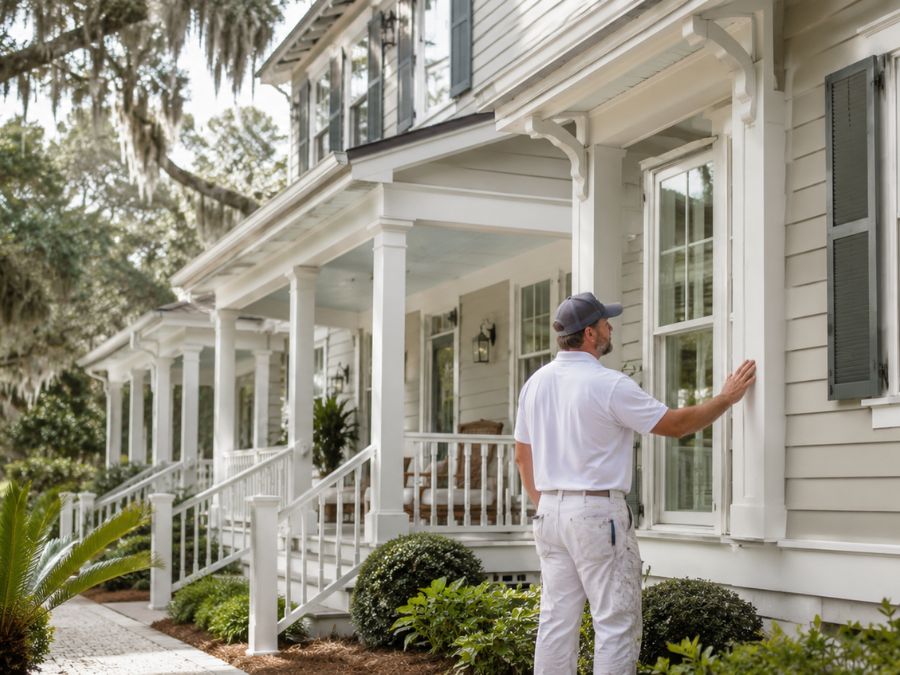
On Hilton Head Island, exterior paint is easy to underestimate because it looks like a style choice.
A softer body color, fresh trim, a clean porch ceiling, or a sharper front door can absolutely change the way a home presents itself from the street. But on an island property, paint is doing much heavier work than most people give it credit for. It is standing between the home and a steady cycle of salt air, ultraviolet exposure, humid mornings, wind driven rain, mildew pressure, and shade that can keep exterior surfaces damp long after a storm has passed.
That makes exterior paint less like decoration and more like asset protection.
For homeowners, second home owners, and vacation rental investors, this distinction matters. A well maintained exterior coating helps protect siding, trim, doors, shutters, porch ceilings, railings, fascia, and other vulnerable materials before damage becomes obvious. Once paint begins to fail, the issue is rarely just cosmetic. The exposed surface underneath is already losing protection.
On Hilton Head, where home value is tied closely to curb appeal, maintenance history, and the rhythm of coastal living, exterior paint deserves a more serious place in the maintenance calendar.
Paint Is Part of the Home’s Weather Barrier
Exterior paint is often discussed in terms of color, but its more important role is performance. A good exterior coating helps shed moisture, seal vulnerable surfaces, and slow the weathering process on materials that take constant exposure.
That is especially important in coastal and island environments.
A Hilton Head home may sit beneath live oaks, face a lagoon, back up to marshland, or rely on wide porches and roof overhangs for shade. These features give island homes their character, but they also create complicated exterior conditions. One wall may bake in afternoon sun. Another may stay damp from tree shade. Porch columns may take humidity and hand contact. Fascia boards may deal with runoff. Shutters, railings, and doors may weather faster than the main siding.
Exterior paint has to manage all of that quietly.
When the coating is intact, moisture has a harder time reaching wood, trim, and siding. Caulked joints stay better protected. Architectural details hold their shape longer. When the coating breaks down, the home starts absorbing the environment instead of resisting it.
Island Homes Do Not Age Evenly
Exterior paint rarely fails across an entire house at the same pace. Coastal homes age in zones.
The sunny side of the house may chalk, fade, and dry out faster. The shaded side may collect mildew and stay wet longer after rain. Elevated verandas may protect some walls while exposing railings, stair edges, and columns. Louvered foundation details, porch skirts, shutters, and trim returns can trap moisture or collect salt residue in small pockets. Traditional Southern porch ceilings may look pristine at a glance while edges near beams or fans begin to show early wear.
A home can look fine from the driveway while the vulnerable spots are already signaling trouble.
This is why exterior paint maintenance should not be based only on whether the house “still looks good.” A coastal property needs closer reading. The first signs of failure often appear at transitions: where trim meets siding, where railings meet posts, where a porch ceiling meets a beam, where shutters meet fasteners, where fascia meets the roofline, or where landscaping keeps lower boards shaded.
Those small areas are where water and sun usually start their work.
The Costliest Mistake Is Waiting for Obvious Failure
Many homeowners postpone exterior painting until the house looks tired. By then, the job may have moved beyond a standard repaint.
Once paint loses adhesion, moisture can reach the substrate. Wood trim may soften. Caulk may split open. Siding may begin to swell or check. Mildew can become more persistent. Bare edges can start drinking in humidity. A repaint that could have been preventive turns into repair work.
Contractors often think in preventative cycles for this reason. The ideal time to repaint is not when the exterior looks neglected. It is when the coating is still mostly intact but beginning to show early weakness in high exposure areas.
Professional painting companies such as Simon Painting often approach exterior coatings as part of the home’s protective envelope. That perspective matters in harsh exposure conditions, where UV stress can break down binders, salt residue can interfere with adhesion, and moisture can move behind failing paint before the homeowner sees major surface damage. A durable exterior finish depends on proper washing, scraping, mechanical profiling, primer selection, caulk performance, and a clear understanding of what the substrate is doing.
That is trade logic, not decoration.
A good paint job should improve curb appeal. A professional exterior coating strategy should also interrupt the path from weather exposure to material failure.
Shade Is Beautiful. It Is Also Hard on Paint.
Shade is one of the great luxuries of island living. It keeps porches more comfortable, softens the look of a home, and gives many Hilton Head properties that tucked away feeling people love.
It also slows drying.
Areas under live oaks, deep roof overhangs, covered verandas, and dense landscaping may hold moisture longer after rain or humid mornings. That lingering dampness encourages mildew and can shorten the life of exterior coatings. North facing walls, porch corners, lower trim, shaded railings, and areas near thick plantings deserve more frequent inspection.
The issue is not that shade is bad. The issue is that shade creates a different maintenance pattern.
A shaded wall may not fade as quickly as a sunny one, but it may develop mildew, discoloration, or adhesion issues sooner. The surface can look dirty before it looks damaged. Failed caulk may read like a fine shadow line. A small blister near a trim joint may be easy to ignore until it spreads.
Island homes tend to reveal maintenance needs in small places first.
Sun Exposure Creates Its Own Wear Pattern
The parts of a home that avoid mildew may be taking the hardest hit from sun.
Strong UV exposure can fade color, dry out coatings, and create chalky residue on painted surfaces. Darker shutters, doors, and accent colors may lose depth faster in exposed areas. Horizontal trim, railings, and edges often wear before broad vertical surfaces. South and west facing elevations may look older than the rest of the house even when the entire exterior was painted at the same time.
This uneven aging is not poor design. It is coastal exposure doing what coastal exposure does.
A smart exterior paint plan accounts for it. High exposure areas may need better prep, more durable products, more frequent touch ups, or closer seasonal monitoring. Owners of vacation homes and rental properties should pay special attention to the surfaces guests touch and notice first: entry doors, porch railings, stairways, shutters, outdoor showers, and screened porch details.
Those areas carry both wear and first impressions.
Vacation Homes Need a Maintenance Rhythm, Not Emergency Repairs
Hilton Head vacation homes and rental properties have a different maintenance reality than full time residences.
There are more arrivals, more luggage, more hand contact, more outdoor use, more cleaning cycles, and more eyes on the property. Guests may never notice the technical condition of a coating, but they notice whether a home feels cared for. Peeling trim, faded shutters, stained siding, or tired porch railings can change the perception of the entire property before the front door opens.
For owners managing from a distance, exterior paint should be built into an annual review. Not every inspection will lead to repainting. Sometimes the right move is washing, targeted caulk repair, spot priming, or repainting high wear details before the next busy season.
The point is to avoid discovering problems only after they become visible in photos, guest comments, or a property manager’s urgent message.
Coastal homes do better with rhythm than reaction.
Color Choices Carry Maintenance Consequences
Exterior color on Hilton Head has to work with architecture, landscape, and exposure.
The island’s homes often look best in palettes that feel connected to the setting: soft whites, oyster tones, muted greens, weathered grays, sandy neutrals, blue influenced accents, natural wood, and understated trim. A front door or shutter color can add personality, but the most successful exteriors usually feel settled into the trees, paths, marsh views, and neighborhood scale around them.
Color also affects performance.
Very dark colors can absorb more heat and may show fading faster in exposed areas. Very light colors may reveal mildew, dirt, and staining sooner in shaded areas. High contrast trim can look crisp, but it also draws attention when caulk lines fail or edges begin to peel. Porch ceilings, especially traditional blue or blue green tones, may hold their charm beautifully when maintained but can make surrounding trim look tired if neglected.
The right exterior palette is not just the one that photographs well. It is the one the homeowner can maintain.
The Physical Envelope Vulnerability Matrix
Instead of waiting for the whole house to look worn, homeowners should learn where exterior paint tends to fail first. These are the areas that deserve the closest look during seasonal maintenance walks.
| Vulnerable Area | What Usually Goes Wrong | Why It Matters | What to Watch For |
|---|---|---|---|
| Window and door trim | Caulk separates, edges peel, paint thins at corners | Water often enters at joints before broad surfaces show damage | Hairline cracks, exposed edges, soft trim, bubbling near seams |
| Porch railings and columns | Hand contact, humidity, and sun wear down finish | These details shape first impressions and protect structural surfaces | Worn top rails, peeling at post bases, mildew near shaded joints |
| Fascia and roofline trim | Runoff and UV exposure weaken coatings | Failed paint here can expose wood to repeated moisture | Staining, chalking, cracked caulk, peeling below roof edges |
| Shutters and accent details | Darker colors fade or chalk faster | Accent pieces can make the whole exterior look tired when they age unevenly | Fading, dullness, fastener staining, peeling at edges |
| Porch ceilings and beams | Humidity collects around seams, fans, and corners | Ceilings define outdoor living spaces and reveal maintenance quality | Mildew, seam cracks, discoloration around fixtures |
| Lower siding and foundation adjacent trim | Landscaping, sprinklers, and shade keep surfaces damp | Moisture at lower elevations can create early coating failure | Dirt line buildup, mildew, blistering, softened boards |
| Stair edges and elevated entries | Foot traffic and weather break down exposed edges | These areas affect both appearance and safety perception | Bare spots, worn nosings, peeling on handrails |
| Garage doors and entry doors | Sun, humidity, and daily use stress the finish | Doors are major curb appeal features and high contact surfaces | Fading, swelling, cracking finish, dull or uneven sheen |
This kind of inspection does not require panic. It requires attention. A few early warning signs may lead to simple maintenance. Ignoring them can turn a paint issue into a repair issue.
Exterior Paint Is Easy to Overlook Because It Works Quietly
The best exterior paint job does not call attention to itself every day. It lets the trim hold its line, the shutters keep their depth, the porch ceiling look fresh, and the entry feel ready for the next guest or family visit.
On Hilton Head, the right time to look closely is usually before the pressure arrives: before peak rental occupancy, before storm season, or before a long stretch when the owner will be away from the property. A slow walk around the house in those windows can catch what a quick glance from the driveway will miss.
Look at the shaded trim after a damp morning. Check the porch railings where hands naturally land. Study the fascia below the roofline, the door that takes the most afternoon sun, and the lower boards near landscaping. Those are the places where an exterior coating usually tells the truth first.
Handled early, exterior paint maintenance is not a dramatic project. It is part of keeping an island home ready for the weather, the season, and the people who come through the door.