
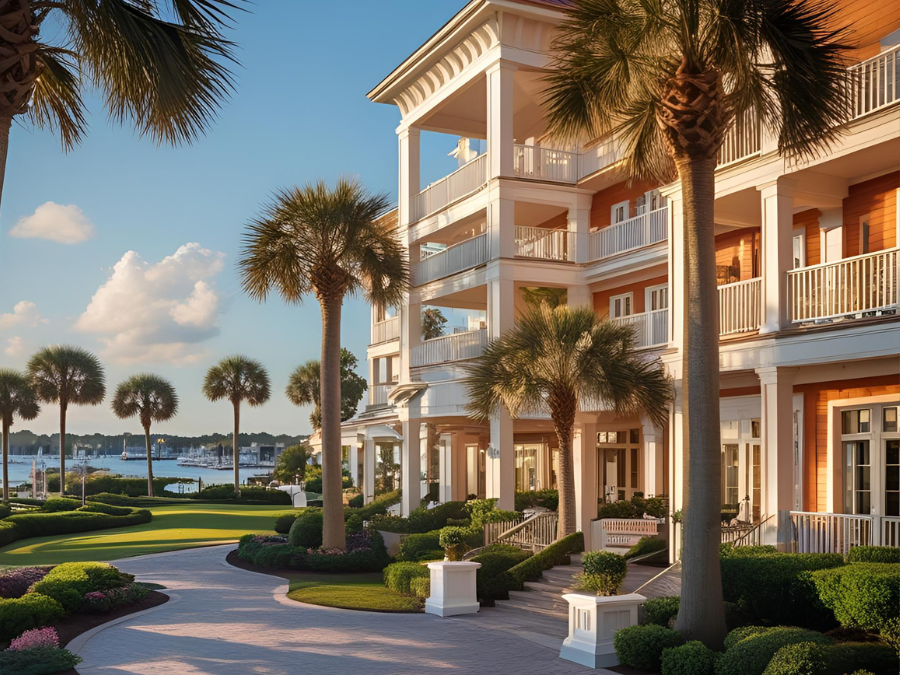
Hilton Head Island is indeed a wealthy area, with a median household income of approximately $96,715, which is notably above national averages. The real estate market reflects this affluence, as average home prices are around $764,829. Additionally, the community has a low poverty rate of about 8.41%. Given these statistics, we can see how the demographic composition, particularly the presence of affluent retirees, influences the local economy. There’s much more to uncover about this intriguing area.
Overview of Income Levels in Hilton Head Island
While evaluating the income levels in Hilton Head Island, we find that the median household income stands at an impressive $96,715, signaling an affluent community. This figure reflects diverse income sources, with households led by individuals aged 45 to 64 reporting the highest median income of $108,767. Significantly, younger households under 25 earn considerably less, averaging $45,737. The average household income, ranging from $141,072 to $152,870, indicates substantial economic trends where higher earners skew the average. The poverty rate of approximately 8.41% further emphasizes the relative affluence of the area. Notably, Hilton Head Island’s economy is bolstered by major industries such as tourism and real estate, which enhance community safety and stability. Overall, Hilton Head Island’s income levels are among the highest in South Carolina, supported by robust tourism and real estate sectors that enhance community safety and stability.
Wealth Distribution and Demographics
How does the wealth distribution in Hilton Head Island reflect its demographics? We observe significant wealth indicators showing a median household income of $96,715, but with pronounced disparities. The top 5% earn an astonishing mean income of $794,461, starkly contrasting with the lowest quintile’s average of $22,978. This discrepancy highlights income inequality driven by demographic shifts, including a growing population with a substantial percentage of retirees. With a median age of 59.9 years, the income levels vary across age groups, particularly declining for those aged 65 and older. The area’s low poverty rate of 8.41% adds to its appeal, though the income spread suggests that financial security can vary greatly among residents. Additionally, this demographic trend is supported by the 2025 projected population of 38,437, indicating ongoing growth in the region.
Real Estate Market Dynamics
The wealth distribution in Hilton Head Island considerably influences the dynamics of its real estate market. With average home prices at $764,829, we see a steady appreciation trend, reflecting the demand for luxury properties. As of May 2025, homes sold in an average of 63 days, down from 81 days the previous month, indicating robust market demand. Despite a 25% increase in inventory, median sale prices remain strong, showcasing resilience even in a shifting landscape. Sellers achieve 95.4% of their original asking prices, reinforcing confidence in this market. While the number of closed transactions decreased, the volume of new listings rose markedly, offering buyers more choices and heightening competition among sellers. Consequently, we observe a balanced yet dynamic market environment. This stability is further evidenced by the average home value in Hilton Head Island, which has seen an increase of 0.7% over the past year.
Comparison to National Income Averages
When we compare Hilton Head Island’s income metrics to national averages, we see a clear distinction. The median household income here stands at $96,715, considerably exceeding the national figure of around $67,000, while our poverty rate of 8.41% is lower than many cities across the country. These indicators suggest a more affluent demographic and highlight the economic stability of our community. Notably, the median household income in Hilton Head Island is 123.14% of the U.S. median household income of $78,538 (2023 inflation-adjusted).
Income Comparison Metrics
While examining income comparison metrics, it’s clear that Hilton Head Island presents a more affluent profile than many other regions in the United States. The median household income at $96,715 surpasses the national average, and the average household income of $141,072 further emphasizes this disparity. Various income sources, including a robust tourism sector, contribute to the area’s economic stability. Remarkably, larger households earn considerably more, with those comprising seven or more people averaging $250,001. The age-related income trends reveal that households headed by individuals aged 45-64 typically have the highest incomes. Overall, Hilton Head’s income distribution and economic factors indicate a wealthier community when compared to national averages, providing residents with greater financial security.
Poverty Rate Analysis
How does Hilton Head Island’s poverty rate compare to national averages? With reported rates of 8.41% and 7.6%, we see a relatively low poverty statistic, especially when compared to many areas across the U.S. Significantly, the poverty rate among families stands at 5.6%, which suggests a strong level of family stability in our community. These figures indicate that a significant majority of families are financially secure, reflecting the area’s high median household income of $96,715. This income level is well above the national average, reinforcing Hilton Head’s affluent status. Overall, the lower poverty rates contribute to a perception of safety and economic well-being, making it an attractive place to live.
Affluent Demographic Trends
With a low poverty rate contributing to Hilton Head Island’s overall economic well-being, we can now turn our focus to the affluent demographic trends that further illustrate its wealth. The median household income here stands at $96,715, considerably above the national average, while average household income reaches $152,870. Remarkably, households with seven or more people average $250,001. This affluent lifestyle is supported by high-end amenities, including luxury resorts and upscale housing options, which attract high-income individuals. Our population, primarily composed of mature residents, grows steadily, reflecting ongoing economic stability. With per capita income also exceeding national averages, it’s clear that Hilton Head Island not only invites wealth but cultivates an environment where affluence thrives.
Age and Income Correlation
When we examine age and income correlation in Hilton Head, we notice distinct patterns in income growth as individuals progress through different life stages. Residents aged 25 to 44 typically earn more, reflecting their career advancements and education levels. Additionally, older populations often exhibit wealth accumulation, suggesting that age plays a significant role in shaping financial stability and income potential.
Income Growth by Age
Although income growth generally correlates with age, the patterns in Hilton Head reveal distinct shifts as residents progress through different life stages. We observe a significant income trajectory, with median household income rising from approximately $45,737 for those under 25 to about $86,881 for ages 25-44. The peak occurs in the 45-64 age group, achieving a median income of $108,767. After age 64, we notice a slight decline to $95,263, indicating the age influence on retirement income. This pattern reflects typical career advancement followed by stabilization or reduction in earnings. The aging population suggests a stable financial framework, but it also emphasizes the need for safety and economic planning in retirement years.
Wealth Accumulation Patterns
As we analyze the wealth accumulation patterns in Hilton Head, it becomes clear that age and income play pivotal roles in shaping financial stability. The median age of 46.8 indicates a demographic shift towards a more established resident base, likely correlating with higher wealth accumulation over time. With a median household income of $81,015 and a per capita income of $75,647, we see evidence of financial strength and robust consumer spending. However, while these figures suggest prosperity, underlying income disparities exist. Older residents, often with accumulated wealth, contrast with younger populations facing workforce housing challenges. Addressing these disparities through economic development initiatives can enhance overall wealth accumulation and guarantee sustainable growth for all community members.
Economic Indicators of Affluence
To understand the wealth dynamics of Hilton Head Island, we can analyze several key economic indicators that paint a clear picture of affluence in this community. The median household income stands at approximately $96,715, markedly above national averages, while average household incomes range from $141,072 to $152,870. A per capita income of $48,434, coupled with a low poverty rate of 7.6% to 8.41%, underscores the area’s economic resilience. The median age of nearly 60 indicates a mature population, likely with established careers and accumulated wealth. These factors contribute to a luxury lifestyle, attracting affluent residents and fostering a healthy local economy. Ultimately, Hilton Head Island exemplifies a financially secure community with robust economic indicators.
Housing Affordability Challenges
As we examine housing affordability challenges in Hilton Head, it’s clear that rising rental costs are outpacing income growth for many residents. With limited affordable housing options, the disparity between income levels and housing prices creates significant barriers for potential buyers and renters alike. This situation calls for a closer look at how these dynamics shape the community’s overall wealth and livability.
Rising Rental Costs
Rising rental costs in Hilton Head Island present significant housing affordability challenges for many residents. The average rent ranges from $2,866 to $3,000, which is approximately 64% higher than the national average. Despite a recent decrease of about $200 in the average rent over the past year, rental trends indicate fluctuating prices influenced by seasonal demand and property types. With a median household income for renters at $56,594, many struggle against the rent burden created by high costs. The rental market remains warm, balancing housing demand and supply, yet the 42.3% vacancy rate highlights the ongoing affordability issues. As we navigate these challenges, addressing housing affordability must remain a priority for our community’s stability and growth.
Limited Affordable Housing
The challenges surrounding housing affordability in Hilton Head Island are exacerbated by a significant shortage of limited affordable housing options. We estimate that the island requires at least 200 new workforce housing units to meet urgent demand, yet our current inventory is non-existent. Thousands of workers commute daily, highlighting the pressing need for affordable housing. Recent community engagement efforts, including public meetings, reveal residents’ frustrations with government inaction and a desire for transparency. The Hilton Head Town Council must recognize this crisis and act decisively. By adopting a workforce housing framework that emphasizes partnerships and incentives, we can foster collaboration among public, private, and nonprofit sectors to address this critical issue effectively and sustainably.
Income Disparity Impact
While income disparities in Hilton Head Island present significant challenges to housing affordability, understanding their implications requires a closer examination of the local economic landscape. The median household income of $96,715, while higher than surrounding areas, masks severe income inequality. The top 5% earn an average of $794,461, creating socioeconomic barriers for lower-income residents. High housing costs driven by this income disparity limit access to affordable options, exacerbating existing inequalities. Many families struggle with housing affordability, as the wealth concentrated among higher earners translates to increased living expenses that lower-income households cannot meet. Consequently, we must recognize how these disparities affect community cohesion, access to essential services, and overall quality of life in Hilton Head.
Influence of Retirees on Local Economy
As retirees increasingly settle in Hilton Head Island, their influence on the local economy becomes evident. The significant proportion of residents aged 55 and older contributes to a stable population of about 38,297, with 23.72% being seniors. Retiree spending supports local businesses, enhancing economic activity. Their strong presence in the housing market, with a median home value of $589,000, reflects substantial investment and high housing demand. This demand drives new developments and renovations, helping maintain property values. Furthermore, retirees often attract family and friends, boosting tourism and related economic activities. Overall, the consistent presence of retirees fosters economic stability, making Hilton Head a desirable place to live and invest.
Employment Opportunities and Income Potential
Understanding the employment landscape and income potential in Hilton Head Island reveals a robust local economy shaped by various factors. Recent employment trends indicate a stable environment, with an unemployment rate of 4.00% in March 2025, closely aligning with national figures. The area boasts 94,593 employed individuals, reflecting a diverse economy bolstered by tourism impact, which generates numerous seasonal job opportunities. While specific income levels aren’t detailed, the high standard of living suggests above-average income potential. With key sectors like hospitality, real estate, and professional services thriving, we see promising growth in job availability. As the labor force continues to expand, Hilton Head maintains a favorable outlook for employment prospects and income growth.
Community Amenities Reflecting Wealth
Hilton Head Island’s community amenities undeniably reflect its wealth, showcasing a lifestyle that attracts both residents and visitors alike. The luxury real estate market, with properties starting at $1.5 million, features exclusive neighborhoods with gated access, enhancing privacy and security. High-end amenities, including championship golf courses and private marinas, cater to discerning tastes and lifestyles. Many homes offer resort-style living with custom architecture, smart home technology, and outdoor spaces that embody luxury. The island’s commitment to maintaining its natural beauty and limited inventory guarantees property values appreciate consistently. With upscale services and a strong rental market, Hilton Head presents an attractive option for those seeking both a safe environment and an investment opportunity in luxury living.